Introduction
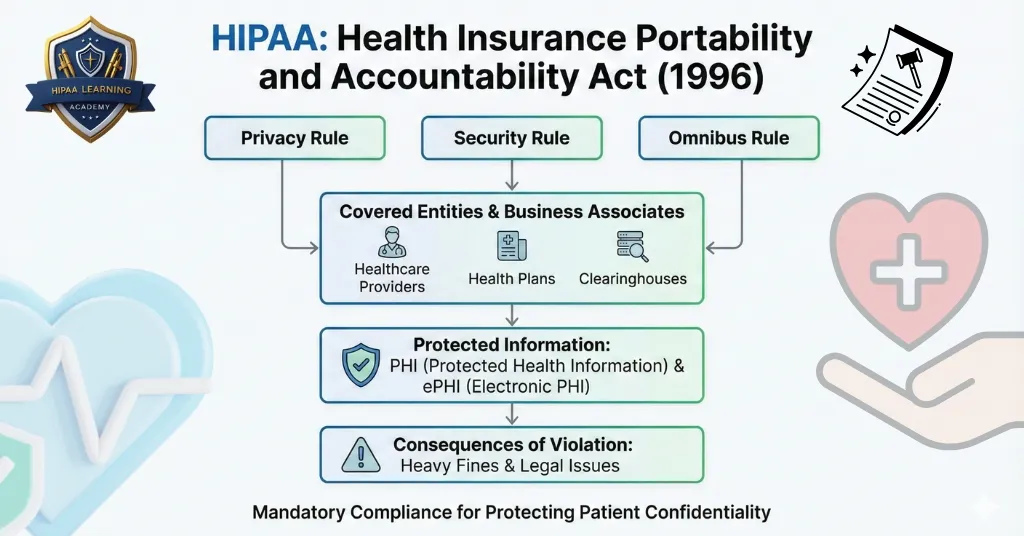
Today, the accuracy and security of patient information are the top priorities in the healthcare industry. As medical billing and coding professionals are the ones who deal with sensitive patient data, they have to be the main focus of the healthcare compliance process. This is the point where HIPAA medical billing rules become relevant. The Health Insurance Portability and Accountability Act (HIPAA) imposes rigorous requirements on healthcare organizations, billers, and coders in terms of how they gather, keep, use, and disclose patient information.
In case that the medical billing or coding teams are not following the HIPAA guidelines, the resulting penalties may be so serious to include different types of costly economic sanctions, legal proceedings, and even a decrease in the level of trust patients will have towards these organizations, putting their reputations in jeopardy. So, here is what the article is about: how HIPAA requirements change medical billing and coding, what rules you need to follow and how you can still be compliant in 2025.
Understanding HIPAA’s Role in Medical Billing and Coding
HIPAA was designed to safeguard Protected Health Information (PHI) and to maintain the security of communication throughout the healthcare system. In medical billing and coding, PHI is the main focus of every step from the examination of patient charts to the filing of insurance claims.
PHI refers to:
Names
Dates of birth
Medical record numbers
Diagnosis codes (ICD-10)
Treatment information
Insurance details
Billing statements
As medical billers and coders are the ones who have direct access to PHI, it is a must that they follow HIPAA medical billing compliance regulations so as not to cause data breaches and to make sure that the claim processing is done accurately.
How HIPAA Privacy Rule Affects Billing and Coding
The HIPAA Privacy Rule defines the conditions under which PHI can be used and disclosed. As per medical billing and coding departments, it is a directive that:
1. Only Authorized Access to PHI
Billing and coding personnel should limit their interaction with patient data to what is strictly necessary for them to carry out their work. This is referred to as the Minimum Necessary Standard.
Access that is not authorized even if it is just to look is an infringement that can result in disciplinary action.
2. Secure PHI Sharing
Any medical information that is shared with insurance companies or clearinghouses has to be shared in a secure way. Fax machines, emails, and EHR systems should all be compatible with security standards.
3. Avoiding Unnecessary Disclosure
Billers and coders should not share patient details in any of the following places: public areas, hallways, cafeterias, or workspaces that are not private. According to HIPAA regulations, an accidental disclosure of any kind is considered a violation.
How HIPAA Security Rule Affects Medical Billing & Coding
The HIPAA Security Rule is specific to the safety of ePHI or electronic PHI. To give an example, the patient data can be in the form of the information stored in the software used for billing; the platforms used for coding; it can also be in the form of the emails; or even in the cloud systems.
1. Strong Password Protections
- Medical billing and coding processes must have the security features that are mentioned below in order to be put into effect:
- Every user should have a separate password that is unique to him/her. Passwords should be changed regularly or timely. When a user login is checked it is done by two-factor authentication (2FA)
2. Encrypted Systems
Any ePHI is required to be encrypted if it is stored or transmitted. The billing software, the practice management system, and the EHR are to comply with these specifications.
3. Role-Based Access
Programmers must be restricted to the segments of the system that are necessary for their work only. For instance, a developer managing ophthalmology data only should not have the access to radiology or the mental health information unless it is necessary.
4. Device and Network Security
Work computers, tablets, and phones must have:
An antivirus program that is always updated – Firewalls – Secure WiFi – Auto-lock features
Any device that is not properly secured may lead to a leak of ePHI.
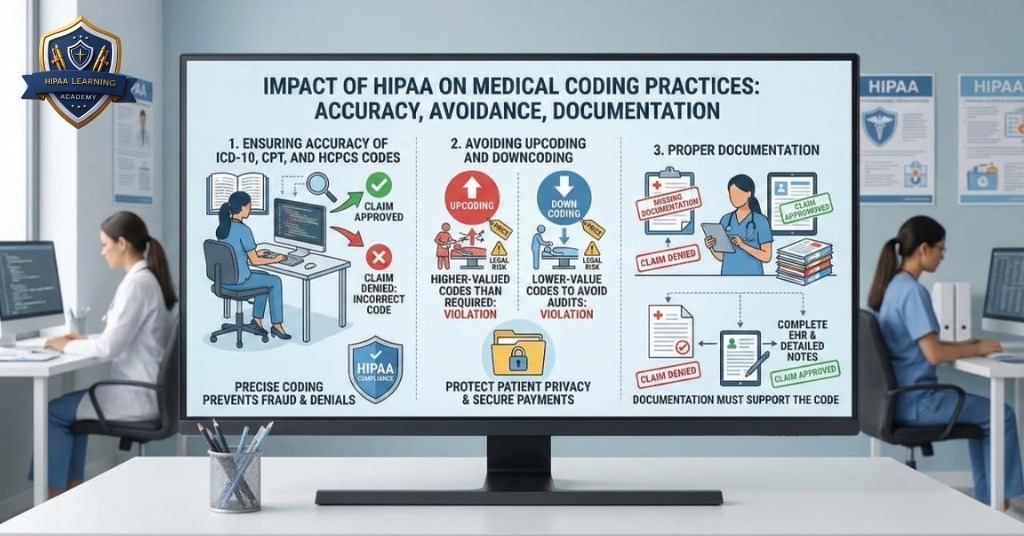
Impact of HIPAA on Coding Practices
Accurate coding plays a crucial role in the process of payment, moreover, it is a must for compliance purposes.
Coding is affected by HIPAA in multiple ways:
1. Ensuring Accuracy of ICD-10, CPT, and HCPCS Codes
If the coding is not done properly, it could lead to the insurance companies denying the claims and in the worst cases, it could cause fraud investigations. According to HIPAA regulations, coders should be very precise so as to allow the right billing process to take place.
Incorrect coding might cause the insurance companies to reject the claims and in the situations where fraud investigations get triggered, the case might be escalated to a higher level.
2. Avoiding Upcoding and Downcoding
Both of them are considered as violations of compliance:
Upcoding: Using the higher-valued codes for a situation than those that are actually required by the situation Down coding: Choosing lower-value codes in order to give a fright to the audit people by the healthcare organization
In either case, the institution employing such practices may face serious legal risks and financial penalties.
3. Proper Documentation
Documentation must be there in every detail if one is to go by the coding.
If the documentation is missing or inaccurate, it can bring about risk of patient privacy and claims that will not be paid.
Impact of HIPAA on Medical Billing
HIPAA medical billing guidelines influence how billers collect, submit, and manage payments.
1. Secure Claim Submission
Insurance claims that are submitted to payers should be transmitted securely – either via encrypted portals or HIPAA compliant software.
2. Data Accuracy
Claim errors can sometimes expose PHI. For that reason, the following actions should be performed by billing staff:
Verify patient names, re-check insurance numbers, ensure codes are correct, and confirm treatment dates. Every error increases the chance of a PHI breach.
3. Proper Use of Clearinghouses
Clearinghouses are like the intermediate layer that connects providers with insurance companies. Since they are the ones handling a large amount of PHI, they have to be very strict in their HIPAA security compliance.
HIPAA and Business Associate Agreements (BAAs)
Healthcare billing firms, medical coding offices, software suppliers, and clearinghouses are categorized as Business Associates according to HIPAA.
All healthcare providers need to enter into a Business Associate Agreement (BAA) with the entity which guarantees:
Confidentiality of PHI
Notification of breaches without delay
Observance of HIPAA regulations
Training of employees
Not having a BAA account is considered as one of the biggest violations of HIPAA.
Common HIPAA Violations in Medical Billing & Coding
Some of the most frequent violations that happen are:
Sending PHI via unencrypted email
Using shared logins
Leaving patient bills or charts visible on desks
Discussing patient cases in public areas
Storing PHI on personal devices
Not deleting old records securely
These small mistakes, actually, have the potential to bring about a fine of several thousands of dollars.
Best Practices for HIPAA Compliance in Billing & Coding

To ensure your team stays compliant:
1. Provide Regular HIPAA Training
- Annual training must include:
- Privacy Rule
- Security Rule
- PHI protection
- New 2025 updates
2. Use HIPAA-Compliant Billing Software
Choose software with:
- Encryption
- Audit logs
- Access restrictions
- Secure backup systems
3. Implement Clear Policies and Procedures
Document:
- How PHI is accessed
- How PHI is shared
- How PHI is stored
- How breaches are reported
4. Perform Regular Audits
Internal audits help catch:
- Coding errors
- PHI exposure risks
- Security weaknesses
5. Limit Access to Sensitive Information
Only allow employees to access the PHI necessary for their specific tasks.
Conclusion
Healthcare Insurance Portability and Accountability Act (HIPAA) greatly affects medical billing and coding by making sure that patient information remains confidential at every stage of the billing process. The entire process from safe claim submission to correct coding and encrypted communication is tightly regulated and necessary not only for protection under the law but also for enhancements in patient care.
Healthcare providers and institutions can protect themselves against potential threats, keep away from penalties, and increase their operational effectiveness by strictly adhering to HIPAA medical billing regulations and also by putting into practice robust privacy and security measures.