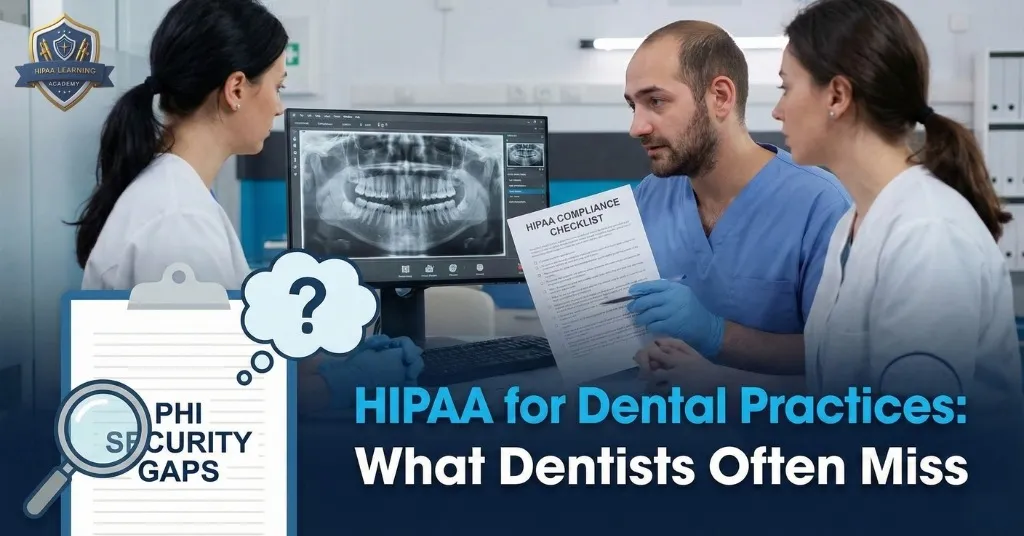
HIPAA for Dental Practices is a complex area of compliance that has become very significant as the dental industry is going through digital transformation and becoming more interconnected. In dental offices, a lot of sensitive Protected Health Information (PHI) is being handled every day, but quite a few still operate under the assumption that HIPAA rules do not apply that strictly to their work processes. So, from digital X-rays to appointment reminders, any patient information interaction needs to have privacy and security safeguards in place.

In spite of such a requirement, a great number of practices are placing themselves in jeopardy without knowing it since they have no idea how extensive HIPAA for Dental Practices is. This comprehensive guide dives in the common gaps, the reasons behind them, and the ways dental offices can achieve full compliance with HIPAA.
Common HIPAA Mistakes Dental Practices Often Overlook

1. Assuming Dentistry Has “Lighter” HIPAA Requirements
Quite a few teams inadvertently break the HIPAA rules as they are not aware of how wide the scope of HIPAA for Dental Practices is. In fact, revealing even the name of a patient, the details of a procedure, or the date and time of an appointment in the areas accessible to the public can result in a breach. The Privacy Rule is an integral part of the medical world and thus it is equally binding on dentistry as on any other healthcare specialty.
2. Not Performing a Complete Risk Assessment
HIPAA mandates that dental offices conduct a risk assessment every year, however, a considerable number of them are either not doing it at all or are just doing a partial review. This is by far the largest single gap in HIPAA for Dental Practices.
A well-defined risk assessment ought to figure out:
Technology vulnerabilities
Physical security risks
Administrative gaps
PHI access problems
Cybersecurity threats
An undocumented office is a non-compliant office, indifferently of whether a security breach has occurred or not.
3. Using Non-Secure Email or Text Messages
The dental teams usually transfer the patient information via:
Normal email
Conventional text messages
Commonly used personal messaging apps
Nevertheless, these means are unsafe. Communication under HIPAA for Dental Practices has to be done via encrypted systems or through a secure patient portal. In case a patient insists on being contacted via regular email, the office still has to inform him/her about the risks and keep a record of that decision.
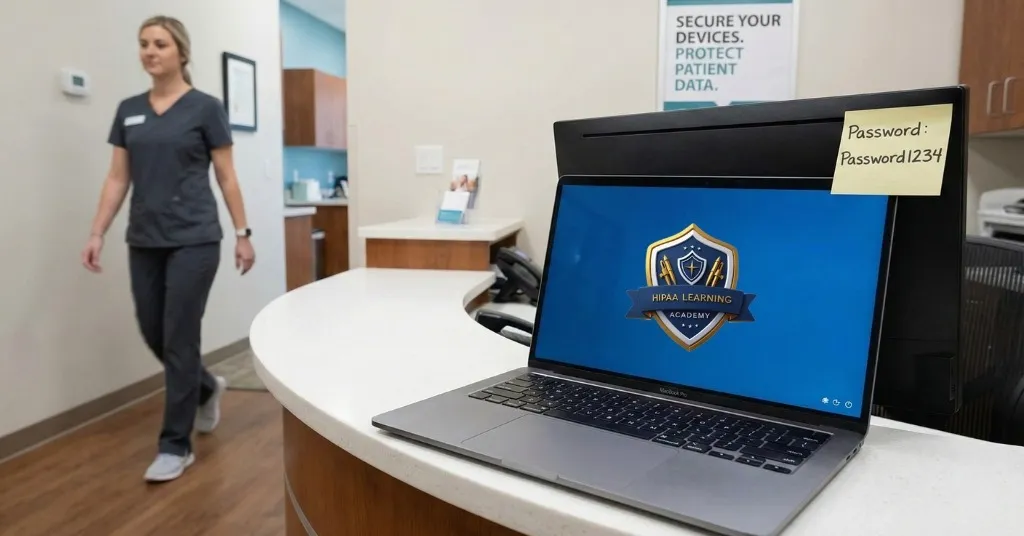
4. Weak Passwords and Poor Device Security
Arguably, digital security has been the most overlooked aspect of HIPAA in dental practices. Just to name a few, these are some of the problems that maybe:
Shared logins
Weak or reused passwords
Unencrypted laptops or tablets
Computers left unlocked
Outdated antivirus protection
If an unencrypted device that holds PHI is lost or stolen, it is considered a breach by default. Securing devices further is one of the easiest ways to increase compliance levels.
5. Mishandling Paper Files and Sign-In Sheets
Despite the fact that many dental clinics have digital systems, they continue to use paper records and charts. A violation is when:
Documents that are not properly filed and are left in a place where people can see them Records of persons who have signed in at a location showing the names of patients Dental charts that are lying on the counter and can be seen by anyonePaper records that are kept in an unlocked room The dental HIPAA regulations require that paper PHI be stored and disposed of in a secure manner. No patient information should be in a place where unauthorized Persons can see it.
6. Insufficient HIPAA Training for Dental Teams
Insufficient training has been singled out as one of the most common compliance gaps resulting in non-compliance just because of a lack of training. HIPAA has established the following requirements:
Firstly, new employees must receive training. A refresher training session should be held annually.It should be recorded when the training has been completed.
If there is no training, staff may unintentionally violate the provisions of HIPAA for Dental Practices without being aware of it, i.e., they may disclose patient information in a public place, open a suspicious email, or mishandle records. Hence, good training is an extremely strong weapon to bring down these risks almost to the level of zero.
7. Missing Business Associate Agreements (BAAs)
Dental offices that perform dental care are extremely third-party-dependent entities to be able to survive. Third parties or vendors are usually companies that can provide the following services to the dental practice:
IT services, Billing services, Cloud software, Imaging and X-ray equipment, Secure communication platforms.
If a vendor has access to Protected Health Information (PHI), then he must sign a Business Associate Agreement. A lack of BAAs is still among the top reasons that lead to HIPAA violations. Just like in hospitals and other healthcare facilities, in order to fully comply with HIPAA in dental practices, one needs to be sure that there are proper agreements in place.
8. Social Media and Marketing Risks
Marketing errors have been on the rise with the expansion of social media. The dental staff is guilty of violating the Health Insurance Portability and Accountability Act of 1986 (HIPAA) in the following ways most frequently:
Posting pictures of patients without a signed consent
Talking about patient stories on the internet
Sharing the pictures where the patient’s confidential information is visible in the background
Simply a casual post can expose the identity of the persons involved without your knowledge. Written permission from the patient is an absolute requirement for any content that includes PHI.
How to Improve HIPAA Compliance in Dental Practices
1. Use HIPAA-Compliant Technology
To ensure that a dental office is in compliance with HIPAA regulations, it is absolutely necessary not only to enhance the hygienic aspect of the dental office but also to raise the standard of the digital systems to a higher level. Most probably, the healthcare facility will require the following equipment: The encrypted email Secure messaging platforms Protected EHR systems Encrypted backups Upgraded firewalls and antivirus software These instruments remove the practice’s areas where unauthorized external access could be possible, and thus, they are the means that ensure the security of PHI.
2. Update Written Policies and Procedures
Healthcare providers such as dentists are required to have, under HIPAA, a written document that specifies in detail:
The methods for managing PHI Privacy procedures Security protocols Breach response plans Staff responsibilities
These documents must be regularly reviewed and updated as needed. Comprehensive policy documents serve as a great dental office management system and are highly effective in setting up a dental practice. They are part of the HIPAA requirements for dental practices.
Three. Strengthen Physical Security
Simple changes can have a big effect in lessening the chances of PHI being leaked without intention, such as:
Adding the act of locking the doors of the filing rooms where the records are kept Using the privacy screens in the reception area Making sure that charts are placed in a location from which no one can look at them and that they are completely hidden from the public Ensuring that only authorized personnel have the
4. Monitor Access Logs
Contemporary dental software has logs that monitor:
the people who accessed PHI
the time when they accessed it
what they looked at or changed
and so on.
Dental HIPAA mandates that dental offices check these logs frequently to spot any kind of illegal or unauthorized access
s.
5. Create a Detailed Breach Response Plan
In case of a breach of PHI, dental offices are required to:
Contain the breach
Document what happened
Notify affected patients
File required reports
Prevent future incidents
Having a written plan helps the staff be on the same page regarding their duties and mitigates the fine amount.
Why Strong HIPAA Compliance Builds Trust
Individuals who require dental care must be able to trust that their privacy will be kept to the highest degree when they seek a service. By following HIPAA regulations, dental clinics are at the same time showing their skills, emotional understanding, and respect for the patients’ right to privacy. Besides the prevention of monetary sanctions, a solid conformity leads to a more patient trust and a dental office reputation improvement.
Final Thoughts
Dental HIPAA practices must be HIPAA compliant in order to ensure the privacy of their patients and to be able to maintain the trust of their patients.Dentists may fully follow the dental HIPAA rules and eliminate the risk of a costly error by improving staff training, securing technology, updating policies, and monitoring who is accessing the PHI. Once everything is in order, complying with HIPAA regulations becomes a habitual practice and it results in a dental practice that is more secure and professional.