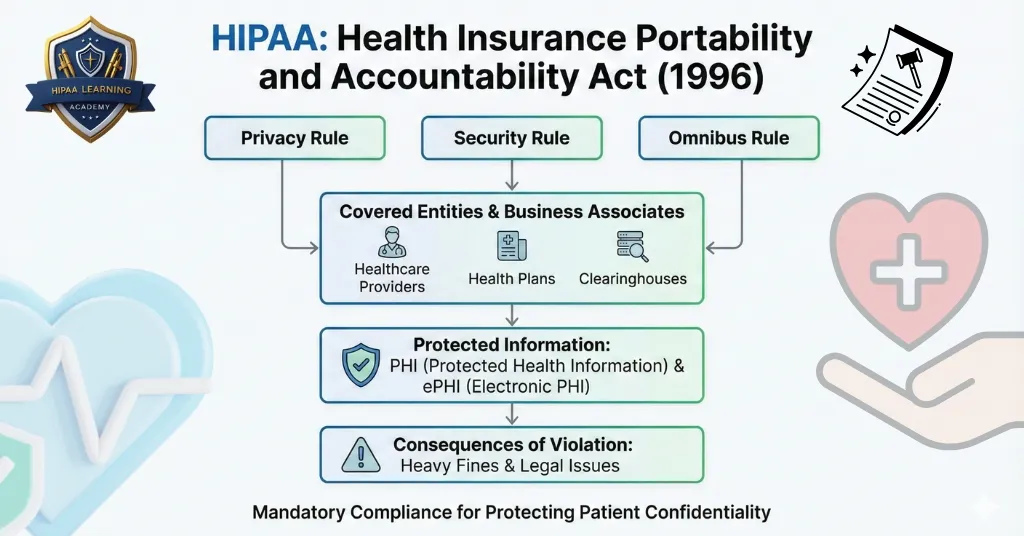
Facing healthcare regulations can be quite overwhelming. HIPAA stands for the most significant healthcare regulation law.
The Health Insurance Portability and Accountability Act was legislated in 1996 and it is commonly known to be the act that is aimed at protecting patient health information. A healthcare professional must know HIPAA inside out, and even those staff members who are not directly involved in patient care need to have the basic understanding of it.
A pre-test of HIPAA is certainly the very first step prior to formal testing as it gives you the opportunity to evaluate your knowledge without the help of the test. This guide will acquaint you with the fundamental concepts of HIPAA and provide you with sample test questions.
Complying with HIPAA regulations is not optional. Healthcare providers, health plans, and clearinghouses are obliged to do so. Violations are punishable by heavy fines and legal issues. Such a detailed manual is indispensable if you intend to be really knowledgeable and confident in any kind of examinations or assessments related to HIPAA.
What is HIPAA? Key Concepts and Purpose
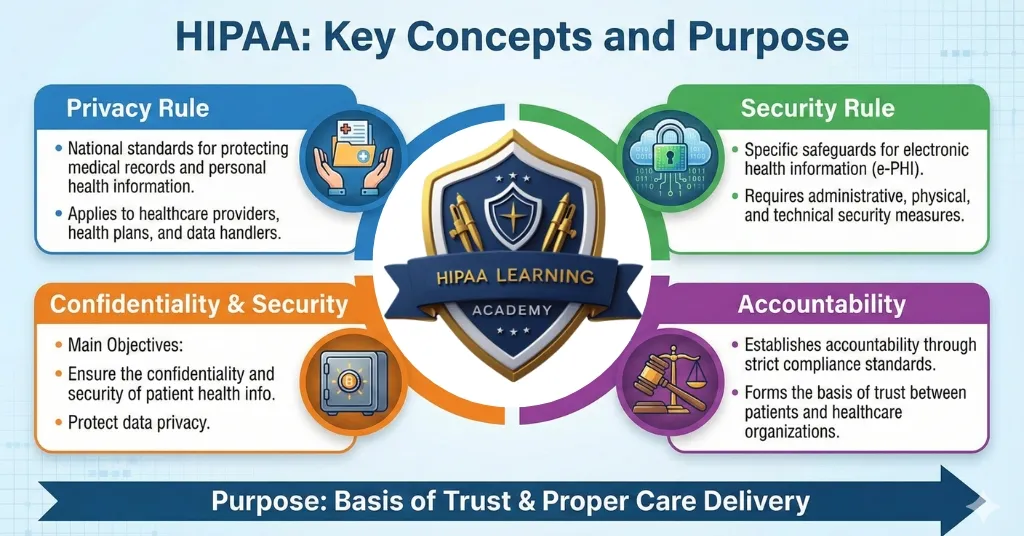
HIPAA is short for the Health Insurance Portability and Accountability Act. It is a federal law established in 1996. The main purpose of the law is to ensure the confidentiality of patient’s health information and also to uphold data privacy and security.
An integral part of HIPAA is the Privacy Rule. It sets out the national standards for the protection of medical records as well as any other kind of personal health information. The providers of healthcare, health plans, and any other organizations that are involved in the handling of patient data are the ones to whom it goes.
The Security Rule is another very significant component. It specifies the steps for the safety of electronic health information. Through this rule, the covered entities are required to employ the necessary security measures that will keep the information secure, confidential, and available.
Ensuring the confidentiality of patient information.HIPAA has among its very important objectives the following: Guaranteeing data security. Ensuring that accountability through standards of compliance is set up. Knowing these major points is indispensable. This forms the basis of trust between patients and healthcare organizations, which is the prerequisite for proper delivery of care.
Who Must Comply with HIPAA?
According to HIPAA (Health Insurance Portability and Accountability Act), compliance is not a matter of choice for some entities. For instance, it healthcare providers, health plans, and healthcare clearinghouses that are obliged to comply with the act. These are the types of organizations that have the most frequent and direct access to patient health information.
In addition, the business associates of these entities are also subject to the same HIPAA regulations. They might be offering some services or facilitating certain activities that require them to have access to protected health information (PHI). They are allowed to carry out the HIPAA regulations so that patient information can be kept confidential. In case you want to express it differently, here is a list of those who are obliged to abide by HIPAA regulations:
Healthcare providers, (e.g., hospitals, doctors)The health plans, (e.g., insurers)Healthcare clearing houses Business associates.It is absolutely necessary to be aware of the compliance requirements. It allows organizations to be free from the heavy fines that may be imposed on them and, at the same time, to be able to keep patient trust by implementing data protection practices.
HIPAA Rules: Privacy, Security, and Omnibus
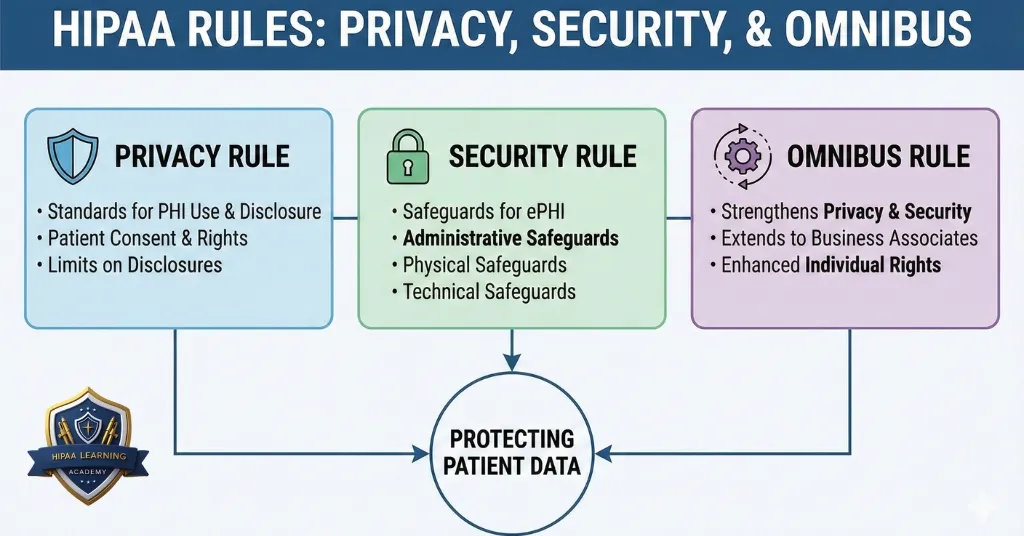
HIPAA is made up of several essential rules that safeguard health information. The Privacy Rule lays down the management and usage of patient health data standards all over the country. It is mainly concerned with the respect of patient consent and the limitation of disclosures. The Security Rule concurs with this by establishing the criteria to protect electronic protected health information (ePHI) that can be met both technically and administratively. The rule covers both sides and is therefore a complete set of safeguards against data breaches.
The Omnibus Rule broadened the scope of HIPAA even more. It revamped privacy and security requirements, in particular, for business associates. Apart from that, the rule provided more rights to individuals with regard to their health information.
Important elements of HIPAA regulations:
- Privacy Rule: Controls the use/disclosure of PHI.
- Security Rule: Shields ePHI by means of certain safeguards.
- Omnibus Rule: Deepens privacy/security and extends business associate obligations.
It is vital to have a thorough understanding of these regulations. Follow the rules that are in place not only to be lawful but also to protect patient data in the era of digitization.
Understanding PHI and ePHI
- Protected Health Information (PHI) is basically what the HIPAA law is all about. It denotes any medical data that can be associated with a particular person. Besides the records, it also encompasses treatment histories and insurance details.
- Electronic Protected Health Information (ePHI) is all about the digital aspect of the data. It is the information of the health care of a patient that is stored or communicated via electronic means.
- Considering the fact that we live in a digitally dependent world, it is absolutely necessary to protect ePHI from being accessed by unauthorized users and data breaches.
- Important parts of PHI and ePHI Health information that can be used to identify a person in different ways. The electronic version of PHI that is kept under strict security protection measures.
- PhI and ePHI are two sides of the same coin that call for strict security measures in order not to jeopardize the patients’ privacy. Making sense of these differences is a way of ensuring full HIPAA compliance and also the preparation of effective data protection strategies.
Common HIPAA Pre-Test Questions and Answers
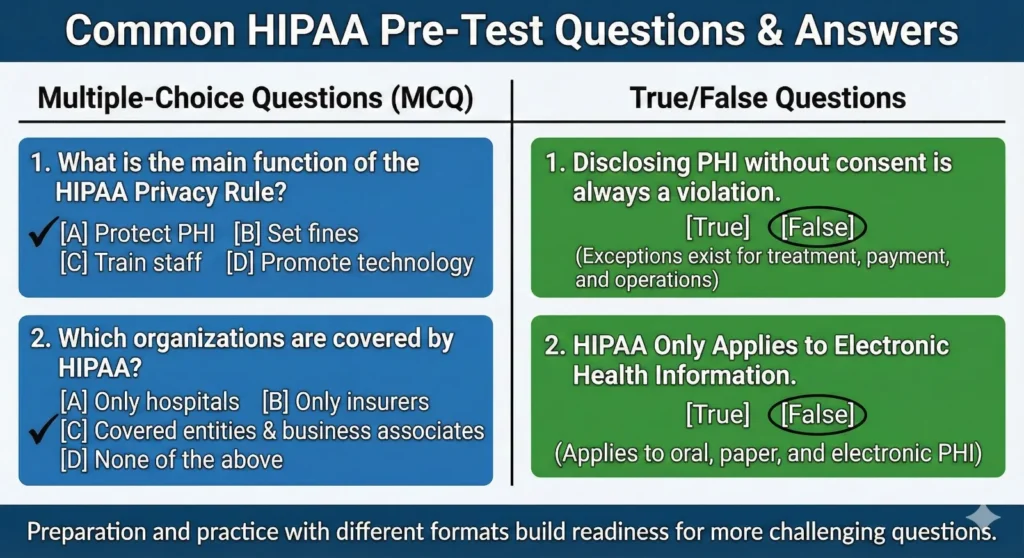
One of the ways to get ready for a HIPAA pre-test is by reviewing typical study questions that pertain to the topic. These types of questions are usually centered around the most basic concepts of privacy and security, which, once you have mastered them, it is very difficult to question your level of confidence at the time of the official test.
There is no question that the privacy of the patient is the aspect that the patient puts the most weight on in a HIPAA pre-test. This, questions might probe about the use and also the sharing of the protected health information.
Moreover, just by determining in which instances a patient’s consent is necessary, one can completely stay away from the illegal acts. Besides that, electronic information security is of the same importance. For instance, questions about encryption standards and secure data storage practices that would be answered without hesitation if a person is well-versed in them. Furthermore, it is very important to constantly remind yourself that you are actually securing the digital records when you find the vulnerabilities.
It could be that some of the items in the pre-test are formatted as multiple-choice such as:
- What is the main function of the HIPAA Privacy Rule?
- Which organizations are covered by HIPAA?
True or false questions that are based on understanding of the fundamental concepts might be like this:
- Disclosing PHI without consent is always a violation. True or False?
- HIPAA Only Applies to Electronic Health Information. True or False?
Knowing these crucial points will lead you to the correct pre-test answers.
In fact, being prepared is very much evident in the reasoning of the provided answers.
Moreover, by far, the most significant thing is that getting practice in different formats will empower you with the readiness to confront more challenging questions.
HIPAA Quiz Formats: True/False, Multiple Choice, and Scenarios
- HIPAA quizzes often use different types of questions to check the knowledge of the participants in an effective way. Among these, true or false ones are frequently used because of their simple character. They contribute to clearing up misconceived ideas about keeping HIPAA regulations.
- Multiple choice questions demand more comprehensive understanding. They can offer nearly identical answers to confuse the person thinking critically. This method is perfect for checking if the person knows in detail certain rules and practices.
- Also, there are so many questions based on different situations. They try to recreate the closest possible scenarios to evaluate the skills of the practical application. With this type, it is guaranteed that examiners will be able to use HIPAA concepts in their day-to-day work environments.
- Some of the standard quiz formats are: True/false questions to test basic understanding. Multiple choice questions for detailed knowledge. Scenarios to assess practical application.
Tips for Acing the HIPAA Pre-Test
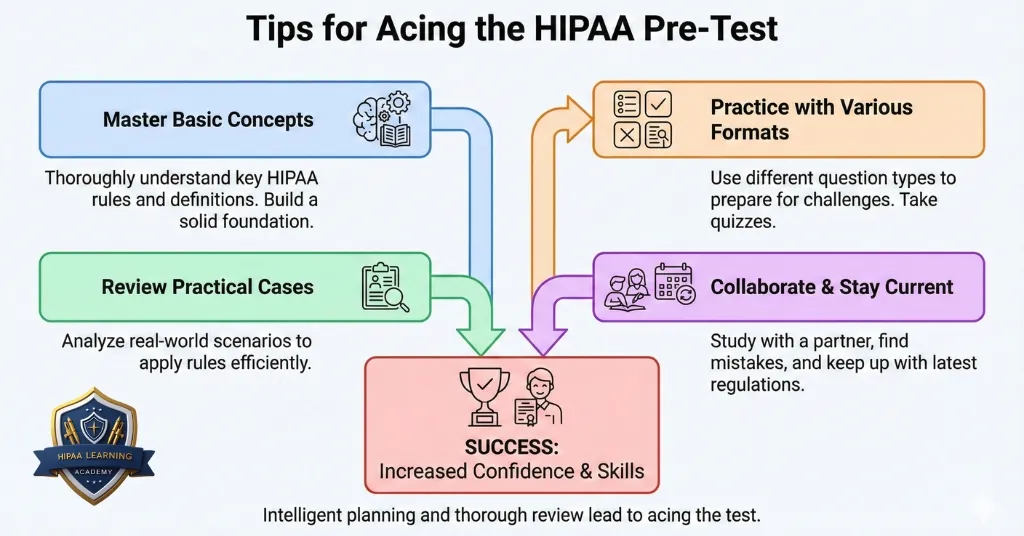
Preparing for a health insurance portability and accountability act (HIPAA) pre-test is mostly a matter of intelligent planning and thoroughly reviewing the material. One simply needs to shine a light on the key points because, after all, it is through these that a solid understanding is achieved.
It is necessary to know the basic concepts of the HIPAA in order to get a good score.
If you are thinking of completely changing the way you work, then you should consider different kinds of tests more often. One good thing about tests with various question types is that they prepare you for the final exam’s challenges. In addition, it is a pretty good idea to come across the cases that are both related to HIPAA and can give you a hint on how to be more efficient in the practical application of the rule in your daily working.
What if you considered some of the following ways to enhance your study sessions:
Stay current with the most essential HIPAA rules at all times. One way to measure knowledge is through quizzes.
Partner up with someone for studying and help each other by finding and correcting mistakes. By employing these tactics, you will be able to increase your confidence and skills when taking the test.
The Importance of HIPAA Training and Continuous Learning
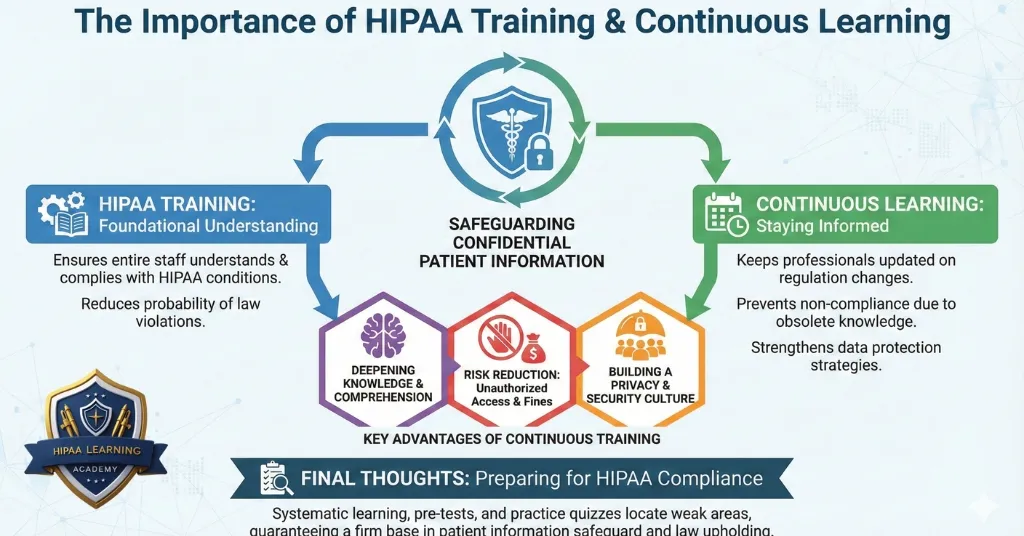
HIPAA training is a very important element in the process of safeguarding confidential patient information. When brought up regularly, a clear understanding of the conditions set by HIPAA and the ability to comply with them, will be possessed by the entire staff. It is such a commitment to instruction that will be the factor which keeps the probability of the law being violated at a very low level.
Continuous training keeps healthcare professionals informed of the newest changes to the regulations. The very frequent updates to the training programs can be a strong weapon against non-compliance due to an obsolete level of knowledge. It is actually being very up-to-date with the latest developments that, in essence, strengthens the overall data protection strategies.
The key advantages of continuous HIPAA training are the following:
Deepening knowledge and comprehension.Risk reduction in the field of unauthorized access to data and monetary penalties.Building and strengthening a privacy and security culture.
Final Thoughts: Preparing for HIPAA Compliance
Mastering HIPAA compliance requires grasping the rules and frequent updates. It is essential to have a systematic way of learning.
Healthcare professionals through pre-tests and practice quizzes can locate their weak areas and deepen their knowledge. These methods are a guarantee of a firm base in the safeguard of patient information and in the upholding of the law.
Summary
HIPAA is a set of federal laws that stipulate how to keep patients’ health information confidential. These laws are embodied by the Privacy and Security Rules, the Omnibus Rule and are obligatory for covered entities and their business associates. Compliance implies knowing what PHI and ePHI are and devising measures to keep them secure.
Generally, pre-tests cover true false, multiple choice, and scenario based questions. An individual can efficiently get ready by learning the most significant parts of the regulations, doing different types of questions, and having study sessions with a partner.Nevertheless, it is still very crucial to be always trained and updated with the latest changes in the regulation as it is a regulation that must be followed and, in case of violations, heavy fines may be imposed.